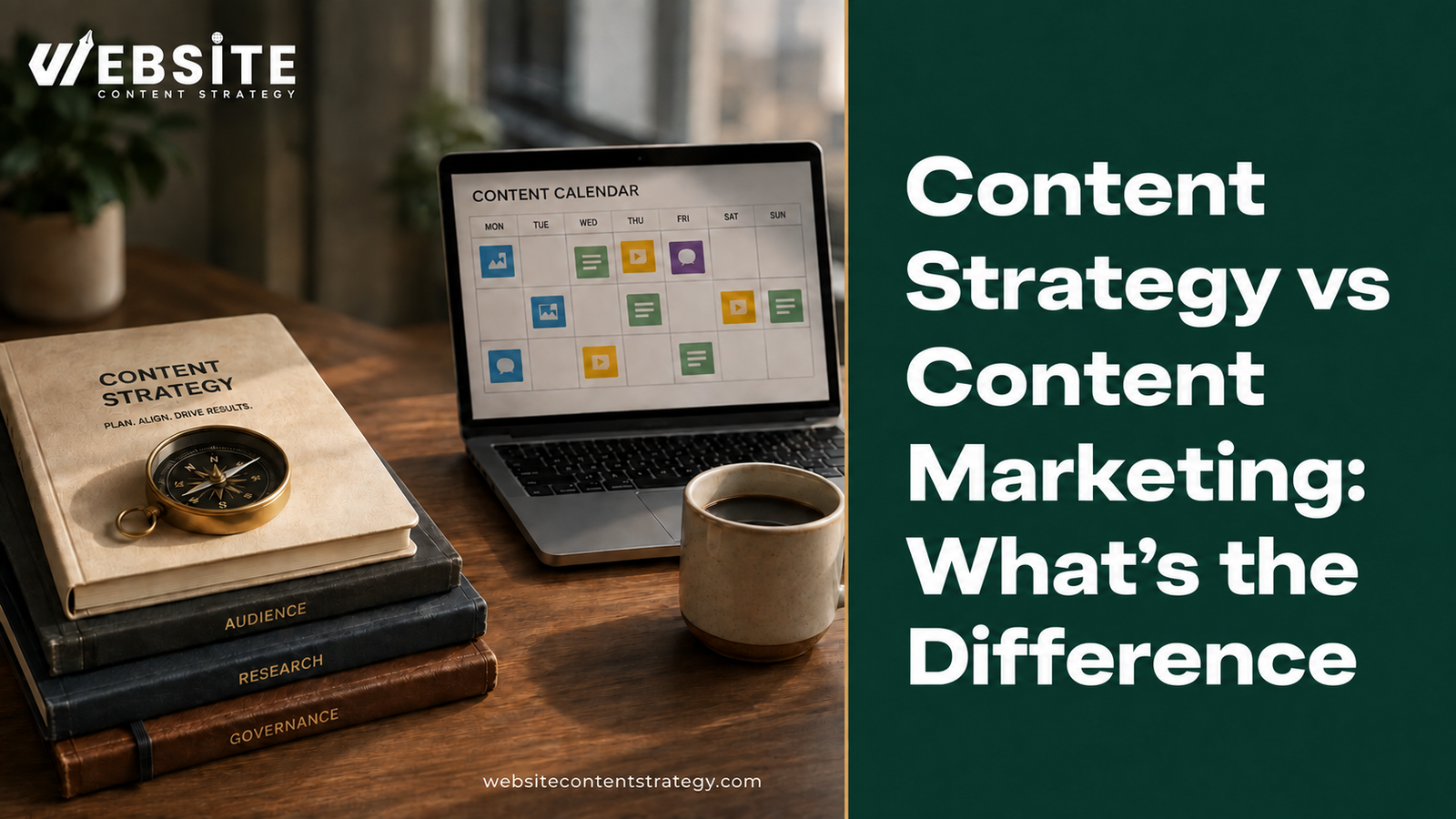
In the content strategy vs content marketing debate, the difference comes down to planning versus doing. Content strategy is the blueprint that decides what content you create, why, and for whom, tied directly to real business objectives.
Content marketing is the execution: producing, publishing, and distributing that content to attract and convert an audience.
A strong content marketing strategy needs both. A solid strategy sets direction through content planning, while marketing brings it to life through content creation strategy and content distribution.
Table of Contents
- What Is Content Strategy? The Blueprint Most Businesses Skip
- What Is Content Marketing? Turning a Plan Into Content People Read
- Content Strategy vs Content Marketing: The Real Differences
- 3 Content Strategy Examples That Actually Work
- When Does Your Business Need Each Approach?
- Where Content Planning and Content Distribution Fit In
- Best Practices for Making Strategy and Marketing Work Together
- Common Mistakes That Break the Handoff
- The Bottom Line
- Final Takeaway
- Frequently Asked Questions
What Is Content Strategy? The Blueprint Most Businesses Skip
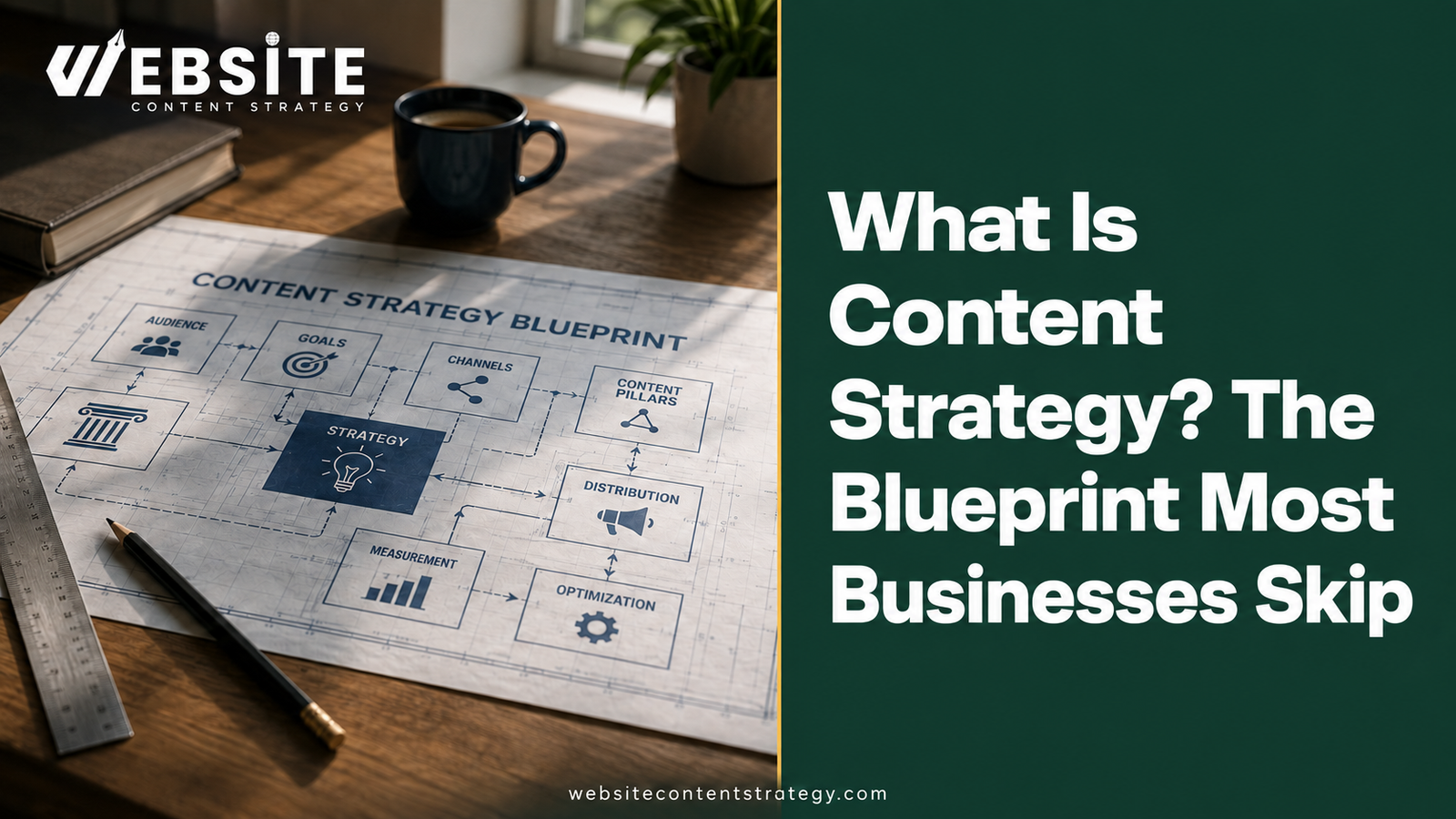
Content strategy is the long-term plan that governs every piece of content your business creates. It answers the big questions before a single word gets written, and it keeps the big picture in view instead of chasing one-off ideas.
Most businesses skip this step because it feels slow, and they want results now. That is exactly why so much content underperforms. A real content strategy gives your team clear content goals and a clear map instead of vague ideals, built by a content strategist who understands both the audience and the business.
- Audience definition: Identifies your intended audience, what they struggle with, their pain points, and what they search for online.
- Goals and KPIs: Ties content to business outcomes like leads and revenue, not just website traffic.
- Topic pillars: Groups content into themes you can own, building brand authority and topical authority with search engines.
- Format and channel plan: Decides whether a topic works best as a blog, video, or email, and which content formats fit your brand voice.
- Governance rules: Sets standards for tone and quality so content stays consistent as your team grows and audience engagement builds over time.
Content strategy is the decision-making layer. It tells you what to create and what to ignore, keeping every asset usable content instead of a one-off post, and it exposes content gaps before they turn into wasted production time.
What Is Content Marketing? Turning a Plan Into Content People Read
Content marketing focuses on more than writing. It includes the full cycle of producing and distributing relevant, high-quality content that people actually consume. The Content Marketing Institute defines this same idea as driving profitable customer action through content instead of interruption, and that profitable customer action is the real measure of whether the work paid off.
- Content creation: Turns strategic topics into finished assets like articles and guides that a content marketer or content marketing strategist can plan around, using repurposing as a core marketing technique.
- SEO optimization: Structures content so search engines and AI tools can find and cite it, using keyword research and optimization tools to guide decisions.
- Content distribution: Pushes content across email, social media platform channels, and paid channels to reach the right people through the right distribution channels.
- Engagement and nurturing: Uses content to move readers through the sales funnel toward a purchase decision.
- Performance tracking: Measures which pieces drive traffic and conversions, often through Google Analytics or other content marketing tools, so you repeat what works.
Strategy points the direction. Digital marketing and content marketing make it move, using existing content as a base and adding new pieces where content efforts are thin.
Content Strategy vs Content Marketing: The Real Differences
Many people use these terms interchangeably, and that confusion creates teams that publish a lot but plan very little, or plan endlessly and never ship. The real difference sits in purpose and timing.
A side-by-side view makes the strategy vs marketing distinction clear, and helps you diagnose which part of your process needs work. The key differences below cover focus, timing, output, and how each side gets measured.
| Factor | Content Strategy | Content Marketing | Core Question | Typical Owner |
| Focus | Planning and direction | Execution and delivery | What should we do vs how do we do it | Strategist or content lead |
| Time horizon | Long-term, 6-24 months | Ongoing and campaign-based | Where are we going | Marketing manager or team |
| Core output | Roadmap, guidelines, topic pillars | Blogs, videos, emails, social posts | What will we produce | Writers, designers, editors |
| Success metric | Alignment with business goals | Traffic, leads, conversions | Did it work | Analysts and marketers |
| Failure symptom | No content plan at all | Content with no audience | Why is this not working | Whole team |
Strategy prevents wasted effort. Marketing creates momentum. You need both working in sync.
3 Content Strategy Examples That Actually Work
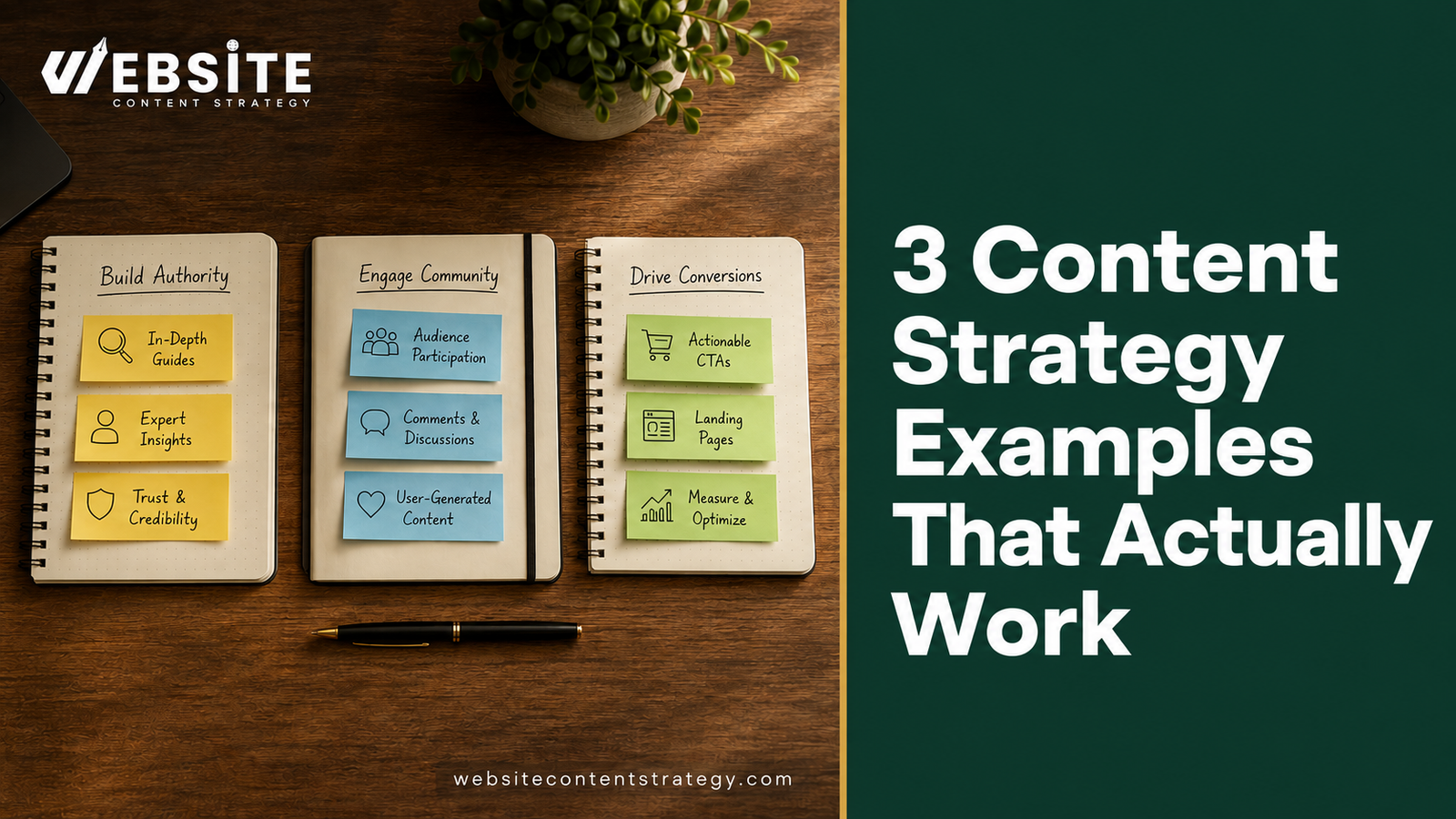
Theory only goes so far. These content strategy examples show how planning changes outcomes for businesses of different sizes, and each one starts by mapping existing content against real content gaps.
- The topic cluster model: A company picks a core theme, writes one pillar page, then supports it with linked articles that build authority across a whole topic, not one keyword. A shared content calendar keeps the supporting articles on schedule.
- The customer-question strategy: A brand answers the exact questions its sales team hears daily, which ranks well and shortens the buying cycle by removing real objections, guided by ongoing keyword research.
- The repurposing engine: A team creates one strong asset, like a webinar, then breaks it into blog posts and clips using an editorial calendar to stretch one effort across many channels.
Each example works because strategy comes first. The content creation strategy flows from a plan, not the other way around.
When Does Your Business Need Each Approach?
Every business needs both eventually. The question is what to prioritize right now, based on your stage, resources, and how much content you already produce. Getting this order wrong is one of the fastest ways to burn a content budget without seeing any real movement in rankings, website traffic, or leads.
- You publish a lot but see no results: You need content strategy, since more output will not fix a missing plan or bring in potential customers.
- You have a clear plan but nothing published: You need content marketing, since strategy without execution earns nothing and reaches no right audience.
- You are a brand-new business: Start with a lightweight content strategy, then move quickly into creation to attract new followers early.
- You are scaling a proven channel: Invest in content marketing systems and distribution to push volume without losing quality, since that combination drives growth fastest.
If you feel busy but not effective, fix strategy first.
Where Content Planning and Content Distribution Fit In
Content planning and content distribution are the bridge between strategy and marketing. Planning connects your strategy to your calendar. Distribution connects your content to your audience across digital platforms, and skipping either one breaks the whole system.
- Content planning: Turns strategy into a concrete calendar of topics, formats, and owners for managing content across the team.
- Keyword and intent mapping: Matches each planned piece to what your audience actually searches for using ongoing keyword research.
- Content distribution: Delivers finished content through social media, email marketing, paid ads, and other owned and earned channels instead of hoping people find it.
- Feedback loop: Feeds performance data and valuable insights back into your strategy so the next plan gets sharper.
Planning and distribution keep strategy and marketing from working in separate silos, and they make it far easier to distribute content consistently instead of in occasional bursts.
Best Practices for Making Strategy and Marketing Work Together
Strategy and marketing fail when they operate apart. The best results come when the plan and the execution stay in constant conversation, and when the marketing team treats content strategy as a shared resource rather than one department’s private document.
- Set shared goals: Tie strategy KPIs and marketing metrics to the same business outcomes.
- Hold regular reviews: Meet monthly to compare planned content against published content and real performance.
- Document everything: Keep your content marketing strategy written down so new team members can act without guessing.
- Let data update the plan: Use analytics to retire weak topics and double down on winners each quarter, since a strong content strategy stays current instead of sitting untouched.
Common Mistakes That Break the Handoff
The handoff between planning and publishing is where most content programs fail quietly. Spotting these mistakes early protects your budget, your content efforts, and your team’s morale.
- Creating before planning: Teams publish first and ask why later. Lock a basic content strategy before production instead.
- Ignoring distribution: Great content sits unseen because nobody promotes it. Budget time and money for promotion.
- Chasing traffic over intent: Content pulls visitors who never convert. Map topics to buyer needs, not just search volume.
- Set-and-forget strategy: The plan never updates as results come in. Fix it with quarterly reviews driven by data.
Most of these mistakes trace back to one root cause: treating strategy and marketing as separate jobs instead of one connected system, where content marketing efforts support the plan instead of replacing it.
The Bottom Line
The difference between content strategy and content marketing is not complicated. Strategy is the plan. Marketing is the action. You cannot succeed with one and skip the other.
If your content feels busy but underwhelming, your strategy likely needs work. If your plan is strong but nothing ships, your marketing needs attention. Diagnose the weak side first, then invest there.
Final Takeaway
Winning content programs treat content strategy and content marketing as partners. A clear content marketing strategy connects smart content planning to disciplined content distribution, so every piece you publish has a purpose and a path to your audience.
Start by writing down a clear strategy this week, then build a repeatable content creation strategy around it. If you want more valuable information and posts like this one, visit our website for more guides on content strategy and AI search visibility.
Frequently Asked Questions
Is content strategy the same as a content marketing strategy?
No, though they overlap. Content strategy is the broad plan that governs why and what content you create across your whole business. A content marketing strategy is narrower and focuses on how you use content to attract and convert customers. Strategy sets the foundation, and the marketing strategy applies it to specific campaigns.
Can a small business skip content strategy and go straight to content marketing?
You can, but it rarely pays off. Skipping strategy usually means publishing content with no clear audience or goal, which wastes limited time and budget. A small business does not need a huge plan. Even a one-page content strategy naming your audience, goals, and top topics makes your content marketing far more effective.
What comes first, content planning or content creation?
Content planning always comes first. Planning decides what to create, who it serves, and how it fits your goals. Content creation then turns that plan into finished assets. Creating content before planning leads to scattered topics, weak results, and a content creation strategy with no real focus, since writers end up guessing at priorities instead of following a clear brief.
How do I measure content strategy versus content marketing separately?
Measure content strategy by alignment: does your published content match your goals, audience, and topic pillars? Measure content marketing by performance: traffic, leads, engagement, and conversions. Strategy answers whether you are working on the right things, while marketing answers whether that work is producing results, and tracking both separately shows you exactly where to fix the process.