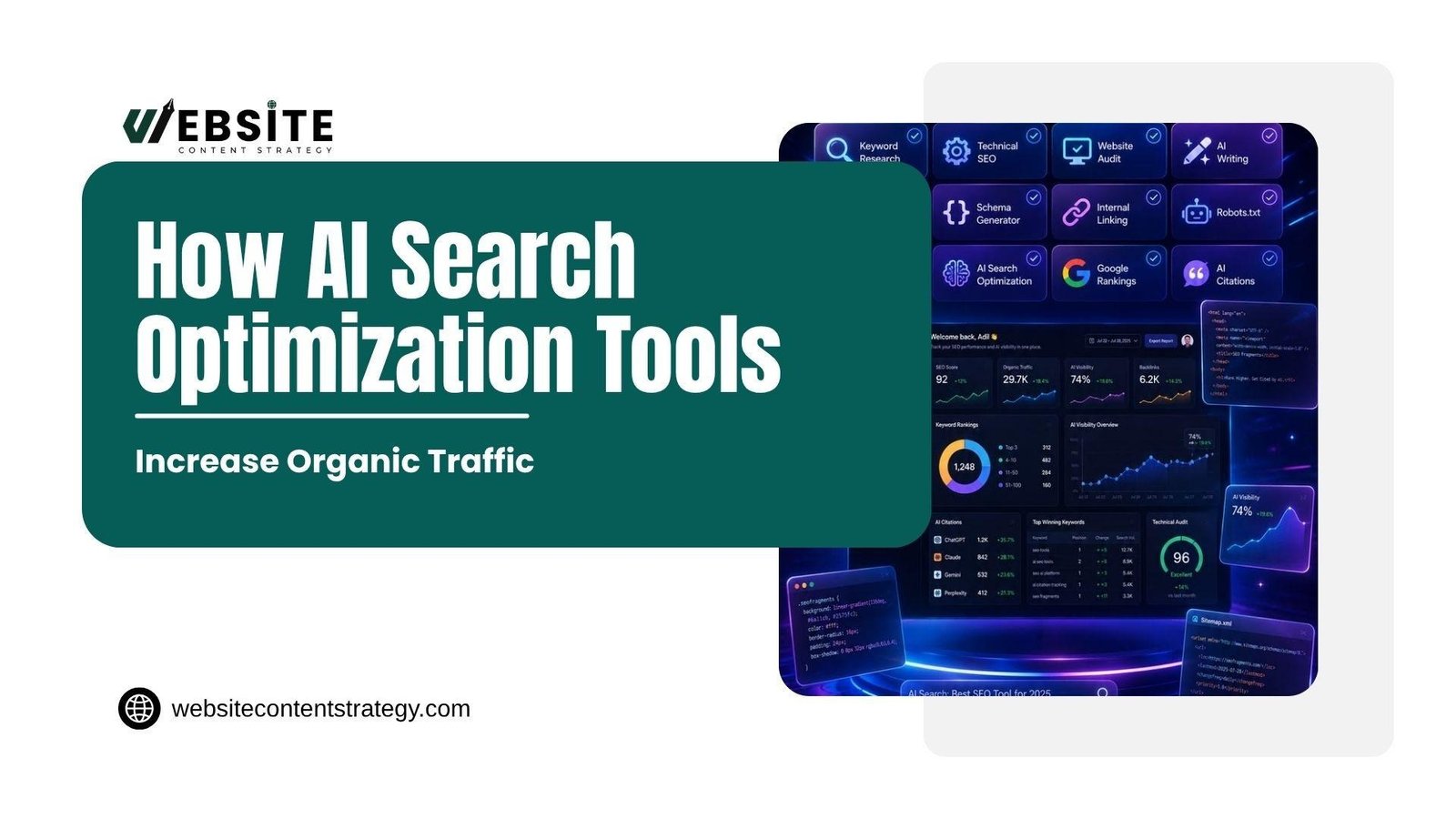
AI search optimization tools increase organic traffic by tracking AI search visibility across ChatGPT, Perplexity, Google AI, and traditional search engines, then pointing to the exact content and structure fixes that win a citation back.
These platforms combine keyword research, competitor analysis, and AI visibility tracking into one workflow. A business does not gain traffic from the software itself. Growth comes from acting on what the data shows across search visibility, search intent, and technical structure.
What Are AI Search Optimization Tools?
AI search optimization tools are software platforms built to monitor a brand’s presence across AI search platforms such as ChatGPT, Google Gemini, Perplexity, and Google AI Mode. They check whether a business appears inside AI-generated search results, not just inside a list of blue links on a traditional results page.
- These platforms sit at the intersection of two disciplines. One side handles classic seo tasks like keyword research, rank tracking, and technical audits. The other side handles newer work: AI visibility tracking, prompt monitoring, and ai search monitoring across major AI platforms.
- A team researching an ai seo platform should expect one core function above all others: daily or weekly checks of how a brand shows up when someone asks an AI system a question. The best ai powered seo tools combine that visibility data with practical recommendations, not just a raw report.
- AI tools can analyze competitor keywords in minutes, a speed advantage that used to take a research team days using manual keyword data collection. That speed is part of why ai seo tools have become standard in fast-moving content teams.
How AI Search Optimization Tools Increase Organic Traffic
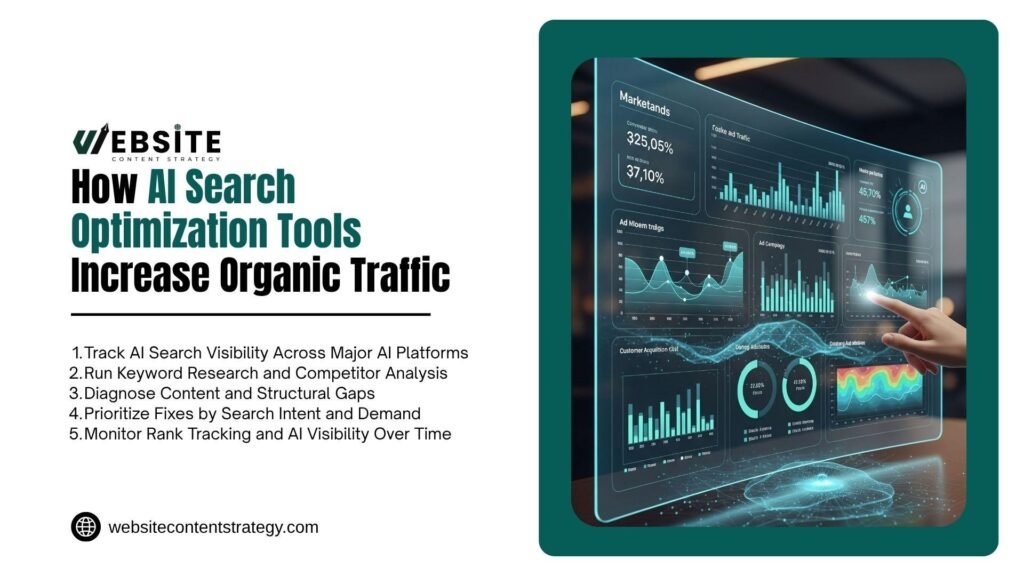
The process behind AI search optimization tools runs through five connected steps. Skipping a step weakens the whole loop, since each stage feeds the next one.
Step 1: Track AI Search Visibility Across Major AI Platforms
A tool checks ChatGPT, Perplexity, Google AI, and other AI search engines on a repeat schedule. It records whether a brand appears in the answer, how it gets described, and which competitor shows up instead.
AIclicks tracks visibility across 10+ AI search engines, giving a team one dashboard instead of ten separate manual checks. Rankscale.ai allows tracking specific search terms on AI engines, which helps a team follow the exact phrases their buyers use.
This step replaces guesswork with real visibility data. A single manual check of ChatGPT tells a team almost nothing on its own, because AI search results shift as platforms update their models and sources.
Step 2: Run Keyword Research and Competitor Analysis
Before fixing anything, a team needs to know what to target. This stage blends traditional keyword research with newer competitor research built for AI answer engines.
A strong research phase should not stop at search volume. It should show which questions competitors already own, which ones remain open, and which phrasing actually matches how people ask AI platforms for help. The most useful checks include:
- Target keyword mapping: Confirm the exact phrase a buyer types into both Google and an AI chat window, since the two often differ.
- Competitor analysis: Identify which pages currently get cited for a topic and note what those pages do well.
- Search intent review: Separate informational questions from buying-stage questions, since AI engines answer each differently.
- SEO data cross-check: Compare keyword data from a traditional SEO tool against the questions an AI visibility platform is tracking.
Step 3: Diagnose Content and Structural Gaps
Once a team knows where it stands, the tool explains why. A missing citation usually traces back to thin content, a page structured so an AI system cannot extract a clean answer, or missing schema.
Content recommendations involve audits of text architecture for AI preferences, meaning the tool checks not just what a page says but how it is built. A page that buries its answer under three paragraphs of background gets skipped even when the information itself is accurate.
Step 4: Prioritize Fixes by Search Intent and Demand
A team cannot fix every page at once. This step ranks the gaps by real buyer demand, so the highest-value pages get attention first.
Frase generates content briefs in under 10 minutes, turning this prioritization step into an actionable writing plan instead of a vague to-do list. Frase creates detailed content briefs in under 10 minutes, which keeps writers moving from research straight into content creation without a research bottleneck.
Step 5: Monitor Rank Tracking and AI Visibility Over Time
After publishing a fix, the tool checks whether the brand now appears in the targeted answer. This combines classic rank tracking with newer AI visibility tracking, since a page can improve in one channel before the other.
Semrush One tracks over 100 million prompts across AI platforms, which gives a team enough scale to spot real trends instead of reacting to single-day noise. Semrush One launched in 2025 to integrate AI visibility tracking directly into a broader SEO workflow, so a team does not need a separate login for every check.
Why Structure and Schema Drive AI Search Visibility
An AI system can only cite content it can parse cleanly. A page with strong research still gets passed over when the direct answer sits buried under a long introduction.
The fix follows a repeatable pattern across every page. Open each section with the direct answer, then expand with supporting detail. Keep paragraphs short enough that each one stands alone.
Schema markup does the same job at a technical level, telling machines exactly what a block of content represents. The most useful schema types for AI search visibility include:
- FAQPage schema: Matches visible on-page questions and answers so an AI system can lift a response directly.
- Article schema: Adds author, publish date, and update date, which signals freshness for a fast-moving topic.
- Organization schema: Connects every brand mention back to one verified entity across the web.
Best AI SEO Tools for AI Search Optimization
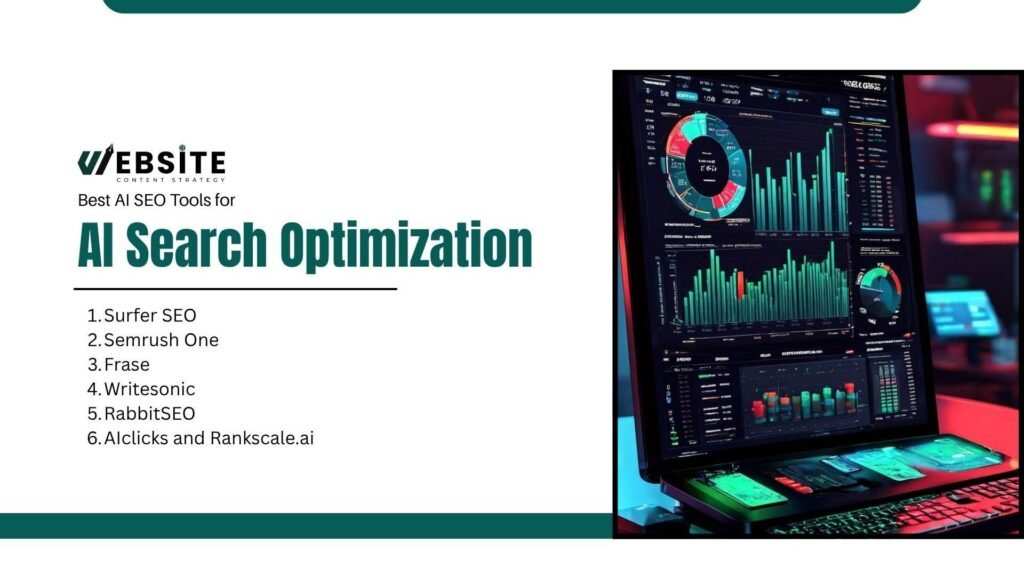
Choosing the right ai seo platform depends on the specific gap a business needs to close. Some tools focus purely on AI visibility tracking, while others fold AI features into a broader seo ai tools suite built for search engines and search platforms alike.
Surfer SEO
Surfer SEO’s Content Editor saves about 2 hours per article on optimization, scoring a draft against top-ranking pages while a writer works inside Google Docs or its native editor. Surfer SEO combines content creation with optimization in one workflow, which removes the need to switch between a writing tool and a separate scoring tool.
Semrush One
Semrush One folds AI visibility toolkit features directly into its existing SEO reporting. Its scale, tracking over 100 million prompts across AI platforms, makes it a strong fit for teams that already rely on Semrush for rank tracking and want AI monitoring in the same dashboard.
Frase
Frase focuses on research speed. It builds a content brief from top-ranking pages and ai search results in minutes, which shortens the gap between keyword research and a writer starting a draft.
Writesonic
Writesonic generates SEO-optimized content drafts in seconds, functioning as both an ai writer and an AI writing tool for teams that need a fast first draft before human editing.
RabbitSEO
RabbitSEO has over 2,000 reviews in the Wix App Market, making it a common choice for teams already building on Wix who want built-in seo best practices without a separate platform migration.
AIclicks and Rankscale.ai
Both tools specialize in narrow visibility tracking rather than full-service SEO. AIclicks watches AI search engines broadly, while Rankscale.ai focuses on tracking a defined list of terms across AI platforms for teams that already know their priority questions.
A team weighing these options should not just compare features against features. The table below breaks down five platforms by category, primary use case, and one standout capability worth checking before committing budget.
Tool | Category | Best For | Standout Capability | Notes |
Surfer SEO | Content optimization | Writers scoring drafts against top pages | Saves roughly 2 hours per article | Works inside Google Docs and native editor |
Semrush One | All-in-one SEO + AI visibility | Teams wanting one dashboard for both channels | Tracks 100M+ prompts across AI platforms | Launched in 2025 as an integrated suite |
Frase | Research and briefing | Speeding up the research-to-draft handoff | Builds content briefs in under 10 minutes | Strong fit for editorial teams |
Writesonic | AI content drafting | Fast first-draft generation | Generates drafts in seconds | Best paired with human editing |
AIclicks | AI visibility tracking | Monitoring presence across many AI engines | Tracks 10+ AI search engines | Narrow, focused tool rather than full suite |
Confirm current pricing and feature depth directly with each vendor before choosing, since this category updates its offerings often.
How to Measure AI Search Presence and Brand Visibility
A single dashboard number rarely tells the full story. Measuring AI brand visibility well means checking several signals together over time rather than reacting to one day’s data.
Sentiment analysis assesses how AI portrays a brand’s tone and accuracy, which matters just as much as whether a brand appears at all. A citation that misrepresents a product can do more harm than no citation. Share of Voice measures the visibility score of brands for specific queries, giving a team a single number to track against named competitors over time.
The most reliable signals to track together include:
- AI referral traffic: Watch for ChatGPT, Perplexity, and Gemini appearing as distinct referral sources inside standard analytics.
- Google Search Console impressions: Check query-level impression data for the exact questions a team targeted, since Google Search Console still reflects how Google itself reads the page.
- Branded search lift: A rise in searches for the brand name often follows a citation, since a reader who saw the brand mentioned later searches for it directly.
- Citation-share trend: Track the percentage of monitored questions where a brand appears as a trend across months, not a single snapshot.
Accuracy is crucial; verify data against Google Search Console before reporting results internally, since third-party AI visibility tools sometimes disagree with what Google’s own data shows.
Tool vs. Manual: When Is It Worth Paying For One?
A small team can run a simplified version of this process without paying for a dedicated platform. Opening ChatGPT, Gemini, Perplexity, and Claude directly, asking priority questions, and logging results by hand captures the same core loop other ai seo tools automate.
This manual approach works at a small scale. It becomes impractical once a team tracks more than a handful of prompts, publishes on a regular schedule, or needs trend data for stakeholder reporting across multiple search platforms.
Look for tools that integrate with existing workflows and tools, since a platform that sits disconnected from a team’s existing content optimization process adds friction instead of removing it. Test tools for at least three months to ensure reliability, because a short trial rarely reveals how consistent a tool’s daily prompt tracking actually is once real usage begins.
Common Mistakes That Waste an AI SEO Tool’s Value
Many teams buy a platform, review the first report, and stop there. A tool only earns its cost once a team turns findings into published changes across real pages.
- Treating the dashboard as the finished product: A report that sits unread produces no traffic on its own, regardless of how detailed it looks.
- Fixing every gap at once: Spreading effort across dozens of pages slows results compared to fixing the highest-demand gaps first.
- Skipping schema after fixing content: Strong writing without matching markup still leaves a machine guessing at what a page means.
- Judging results too early: Checking for a traffic lift after a few days ignores how AI engines actually refresh their answers over weeks.
- Ignoring Google Search Console: Relying only on a third-party dashboard misses how Google’s own systems interpret the same page.
Conclusion
AI search optimization tools increase organic traffic by turning an invisible problem into a measurable one across search engines and AI search platforms alike. They combine keyword research, competitor analysis, and AI visibility tracking into a single workflow that shows exactly which page to fix next.
The traffic itself still comes from the work a team publishes in response: clearer answers, complete schema, and content built around real search intent. A business that tests a platform for a full quarter, cross-checks results against Google Search Console, and prioritizes fixes by demand sees steady growth in both search visibility and AI search visibility over time.
Frequently Asked Questions
Do AI search optimization tools guarantee more organic traffic?
No tool guarantees traffic on its own. AI search optimization tools identify visibility gaps across AI search platforms and prioritize fixes, but actual growth depends on the content and structural changes a team publishes in response.
How is AI search optimization different from traditional SEO?
Traditional SEO tracks a page’s position in search engines. AI SEO tools track whether an ai seo platform cites that same page inside a generated answer, which depends on structure, schema, and answer clarity rather than ranking position alone.
Which AI platforms should a business track first?
Most teams start with chatgpt perplexity google ai since these three represent the largest share of AI-generated search results today, then expand to niche AI search engines as tracking needs grow.
Can a business do this without a paid tool?
Yes, at a small scale. Manually running priority questions through major AI platforms each month and logging results in a spreadsheet captures the same core process a paid ai seo agent automates.
How long should a business test a new AI SEO tool?
Test tools for at least three months to ensure reliability, since a short trial period rarely reveals how consistent a platform’s AI search tracking stays once real publishing volume begins.
What is the biggest mistake businesses make with these tools?
The most common mistake is treating the report as the finished deliverable. A tool only increases organic traffic growth once a team acts on the content, structure, and schema fixes the data points toward.